Research Progress in Antidepressant Effects Of Kidney Tonic Drugs Such As Cistanche Deserticola
Mar 21, 2023
Li Longlong, Zhou Yalan, Gao Lijuan, Lv Ruolin, Zhou Yanan, Liu Li
(Gansu University of Traditional Chinese Medicine, Lanzhou 730000, Gansu)
Summary
Some studies have found that the pathogenesis of depression mainly includes the hypothesis of monoamine neurotransmitters, the hypothesis of brain-derived neurotrophic factors, and the hypothalamus-pituitary-adrenal axis. Currently, research on the treatment of depression with traditional Chinese medicine is relatively popular, with the advantages of multiple targets and fewer side effects. Modern pharmacological research has found that some kidney tonifying drugs have antidepressant effects, with different mechanisms of action. Most of them act on brain neurotransmitters and brain-derived spiritual management to foster children, thereby exerting antidepressant effects. The antidepressant mechanisms of kidney tonifying drugs such as Epimedium, Morinda Officinalis, Cynanchum, Eucommia ulmoides, Dipsacus, Cistanche deserticola ma, Cuscuta chinensis, Lycium barbarum, Extract, and Dendrobium were summarized, providing references for treating depression and selecting drugs from the perspective of the kidney.

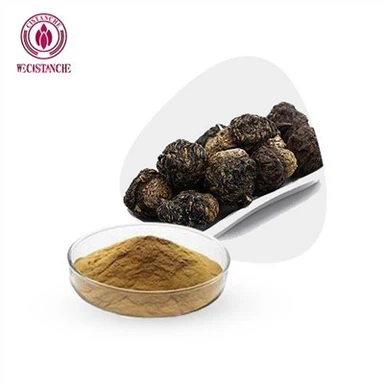
Chinese medicinal materials such as cistanche deserticola
keyword:
depression; Depression; Traditional Chinese medicine; Tonifying the kidney; Mechanism; progress; Cistanche deserticola
Depression is characterized by significant and persistent depression, decreased activity, decreased willpower, and loss of pleasure. Depression has a high incidence rate and disability rate, which seriously threatens people's physical and mental health and brings serious social and economic burdens. In 2010, depression ranked second, accounting for 8.2% of global diseases. WHO forecasts indicate that by 2030, depression will become the leading cause of the global disease burden (WHO report EB130/9.2011). Currently, the antidepressant western drugs marketed at home and abroad are mainly guided by the theory of monoamine neurotransmitters [2], with a single mechanism of action, a long onset time, significant individual differences in therapeutic effects, and significant side effects, which pose a certain risk of suicide. Traditional Chinese medicine has the characteristics of multi-target therapy and low toxicity and side effects, which has the advantage of increasing efficacy and reducing side effects in the treatment of depression. The author reviewed the current research on antidepressant and kidney tonic drugs in order to provide the theoretical basis for the development and application of new antidepressant drugs. Study on antidepressant effects of kidney tonifying drugs.

Chinese herb cistanche—Treating depression by tonifying the kidney
Click here to view Cistanche for Kidney disease products
【Ask for more】 Email: xue122522@foxmail.com / Whats App: 0086 18599088692 / Wechat: 18599088692
1.1 Epimedium
Epimedium belongs to the kidney and liver meridians and has the effect of tonifying the kidney and strengthening the yang. Epimedium has many components, including flavonoids, icariin, polysaccharides, lignans, and other components. Modern research has found that the effective antidepressant component of Epimedium is icariin. Gong et al. [3] established a depression model in rats by intraperitoneal injection of cortisol and intervention with icariin. The results showed that icariin can significantly increase the sugar water preference and the expression level of brain-derived neurotrophic factor (BDNF) in the hippocampus of rats, significantly reduce the immobility time in the water, reduce the content of cortisol, and thereby reverse the pathological process leading to depression. Zhang Cong et al. [4] found that icariin can significantly improve the scores of open-box experiments and sugar preference in depressed rats, reduce the time of forced swimming immobility, and significantly increase the content of monoamine neurotransmitters norepinephrine (NE), dopamine (DA), and 5-hydroxytryptamine (5-HT) in the cerebral cortex, striatum, and hippocampus. The glutamate system has neural plasticity that affects cognitive and emotional functions. Glutamate metabolic and ionic receptors are closely related to the occurrence of depression. Zhang Xiaoxiao et al. [6] found that icariin can significantly increase the expression of glutamic acid metabolic receptor 1, receptor 5, and glutamic acid transporter proteins in offspring depression rats through intervention with icariin, thereby improving the symptoms of depression in rats. At the same time, it has been reported in the literature [7] that icariin can maintain normal cell morphology and physiological functions of nerve cells, and protect and inhibit neuronal damage and apoptosis.
1.2 Morinda officinalis
The root of Morinda officinalis belongs to the kidney and liver meridians and has the effect of tonifying the kidney and supporting the yang. The main components of Morinda officinalis are sugars, iridoid glycosides, anthraquinones, and sterols. The main antidepressant component of Morinda officinalis is Morinda officinalis oligosaccharides. Xu Defeng et al. [9] studied the antidepressant mechanism of Morinda officinalis oligosaccharides in chronically stressed depression rats and found that Morinda officinalis oligosaccharides can significantly improve the behavior of depression rats and increase the expression levels of glutamate receptor subunit-1 (GluR1), BDNF, synaptophysin-1, etc. in the hippocampus of rats, confirming that Morinda officinalis oligosaccharides play an antidepressant role by regulating the BDNF pathway and improving synaptic plasticity. Cai Bing et al. [10] found that Morinda officinalis oligosaccharides can significantly increase the content of 5-HT and DA in the brain of mice, suggesting that it can act on the neurotransmitter system and have antidepressant effects. Deng Shuo et al. [11] used Morinda officinalis oligosaccharides to treat patients with depression and found that they can significantly increase the expression levels of BDNF and glial-derived neurotrophic factor (GDNF) in the plasma of patients with depression, thereby improving the clinical symptoms of patients with depression. Experiments on the pharmacological components of Morinda officinalis showed that Morinda A significantly increased the content of monoamine neurotransmitters (5-HT, NE, DA) in the brain of rats while protecting and inhibiting the damage or apoptosis of neurons in the hippocampus [8, 12].
1.3 Xianmao
Xianmao belongs to the kidney and liver meridians and has the effects of warming the kidney and strengthening the yang, dispelling cold, and removing dampness. The main pharmacological components of Cynanchum are carboxylic pineapple-type triterpenes, glycosides, and methyl phenol. Fu Zenghui et al. [13] found that curcumin can protect and inhibit the damage and apoptosis of neurons in the hippocampus of rats. The main mechanism of action is to protect neurons by increasing the level of estrogen receptor and lymphoma factor 2 (Bcl-2) expression in the hippocampus, and reducing the level of BCL-2-related X protein (Bax) expression; The experimental study by Zhang Yue (14) found that curcumin can significantly improve behavioral indicators such as sugar water preference, horizontal and vertical scores in open box experiments in depressed rats; It was found that the antidepressant mechanism of Simon Ellis is to inhibit the hyperfunction of the hypothalamic-pituitary-adrenal (HPA) axis, reduce the content of cortisol in the blood and the expression level of corticotropin-releasing factor (CRF) in the hypothalamus; It was also found that curcumin can reduce the immune factor interleukin-1 β ( IL- 1 β) 、 Tumor Necrosis Factor - α ( TNF- α) The content of BDNF in the hippocampus of rats increases the expression level of BDNF in the hippocampus and prefrontal lobe.

Chinese medicinal materials such as cistanche deserticola
1.4 Eucommia ulmoides
Eucommia ulmoides belongs to the liver and kidney meridians, and has the effects of tonifying the liver and kidney, and strengthening muscles and bones. The main pharmacological components of Eucommia ulmoides Oliv. include common, aucubin, and flavonoids. Research [15] found that total flavonoids from Eucommia ulmoides can protect neurons by increasing the activity of peroxidase in brain tissue. Xin Weiyun [16] found that the total flavonoids of Eucommia ulmoides can significantly increase the number of autonomous activities in perimenopausal depression model mice, significantly shorten the immobility time of swimming in water and tail suspension, and increase the content of 5-HT, DA in the brain and estradiol in serum, thereby improving the depressive symptoms of mice.
1.5 Continuation
Dipsacus belongs to the liver and kidney meridians and has the effects of modifying the liver and kidney, strengthening tendons and bones, etc. The main pharmacological components of Dipsacus are volatile oils, triterpenoid saponins, and alkaloids. Research [17] has found that total saponins from Dipsacus can prevent and protect the degeneration or apoptosis of nerve cells, thereby improving the pathological damage of hippocampal tissue. Hong Ru et al. [18] found that the extract of Dipsacus can increase the content of glutathione peroxidase and the activity of superoxide dismutase in serum, reduce the content of malondialdehyde, increase the expression of anti-apoptotic protein 2 and inhibit apoptosis promoting protein in the hippocampus, thereby preventing and protecting the apoptosis of hippocampal neurons. The composition of Eucommia ulmoides pills is equal compatibility of Eucommia ulmoides and Dipsacus. Duan Weihua et al. [19] found in the study of Eucommia ulmoides pills on depressed mice that Eucommia ulmoides pills, Eucommia ulmoides and Dipsacus can reduce the time of tail suspension in mice and improve the behavior of mice in the open experiment; It was found that both Dipsacus and Eucommia ulmoides can improve the symptoms of depression in depressed mice, but in comprehensive comparison, the antidepressant effect of the two drugs alone is weaker than that of the two drugs combined with each other.
1. 6 Cistanche deserticola
Cistanche deserticola belongs to the kidney and large intestine meridians and has the effects of tonifying the kidney, promoting yang, moistening the intestines, and relieving constipation. Its pharmacological components mainly include iridoid glycosides, Echinacoside, Acteosid, sugars, polypeptides, and other compounds, with the highest content of Echinacoside and Acteosid. Echinacoside and Acteosid can reduce the activity of caspase-3, effectively prevent and inhibit neuronal apoptosis, increase dopamine in the brain, increase the expression level of BDNF mRNA and protein, and reduce neuronal apoptosis [20-21]. Studies have shown that Cistanche deserticola polysaccharide can improve the synaptic plasticity of the hippocampus. Wei Zhenzhen [23] found that Echinacoside and Acteosid from Cistanche deserticola can significantly improve the horizontal and vertical scores of open-box experiments in perimenopausal rats. The possible mechanism is to regulate the secretion of estradiol and testosterone to improve the depressive state. Literature [24] reported the intervention experiment of Cistanche deserticola extract on depression model rats induced by chronic unpredictable stimuli. The results showed that Cistanche extract can significantly improve the sugar water preference and open test scores of rats, shorten immobility time, increase the expression levels of BDNF and 5-HT in the hippocampus, improve the morphology of hippocampal neurons, and have the effect of protecting neuronal apoptosis, Thereby confirming the antidepressant effect of cistanche extract.

Desert ginseng—Treating depression by tonifying the kidney
1.7 Dodder
Cuscuta chinensis belongs to the kidney, liver, and spleen meridians, and has the effects of tonifying the kidney, benefiting essence, nourishing the liver, brightening the eyes, stopping diarrhea, and calming the fetus. The main pharmacological components of Cuscuta japonica are dramatic, soap, and flavonoids. Peng Xuan et al. [25] found that the total flavonoids of Cuscuta chinensis can increase the level of Bcl-2 in the brain, inhibit the expression of Bax, thereby enhancing the plasticity of neurons, protect neurons from apoptosis, and enhance the function of the thalamic pituitary-gonadal axis. Liu Haiyun et al. [26] found that semen muscular extract can significantly increase the content of 5-HT in the serum of insomnia model rats, suggesting that the possible mechanism of the antidepressant effect of semen muscular extract is to regulate the content of monoamine neurotransmitters. At present, there are few studies on the antidepressant effects of a single drug of Cuscuta chinensis, and there are many experimental studies on the antidepressant effects of compatible compounds, such as Zuogui Jiangtang Jieyu Formula, which contains Cuscuta chinensis. Experimental studies have found that Zuogui Jiangtang Jieyu Formula can significantly improve behavioral indicators and reduce IL-1 in depressed rats β、 TNF- α The level of immune factors protects hippocampal neurons from apoptosis in depressed rats.
1.8 Chinese wolfberry
Lycium barbarum fruit belongs to the liver and kidney meridians and has the effect of nourishing the liver and kidneys and benefiting eyesight. Lycium barbarum mainly contains betaine, polysaccharides, thiamine, amino acids, and trace elements, among which Lycium barbarum polysaccharides are the main components. Zhou Jian et al. [29] discovered through research on the effects of Chinese wolfberry on chronic psychological stress depression rats that Chinese wolfberry can significantly improve the behavior of depression rats, regulate the function of the HPA axis in depression rats, significantly reduce the content of cortisol in the serum of depression rats, and reduce the expression level of glutathione receptor in the hippocampus of rats, thus playing a protective role on hippocampal neurons. Lycium barbarum exerts antidepressant effects by regulating the HPA axis and protecting hippocampal neurons.
1.9 Rhizoma Polygonatum
Huangjing has the effects of nourishing qi and yin, strengthening the spleen and moistening the lung, and benefiting the kidney. The main pharmacological components of Polygonatum are polygonatum polysaccharide and Polygonatum total glycosides. Zhu Lingli et al. [31] used total saponins of Polygonatum to intervene in stress depression model rats. The results showed that total saponins of Polygonatum can significantly improve glucose preference, increase the number of autonomous activities, and increase the expression levels of BDNF and tyrosine kinase in the cerebral cortex and hippocampus of depressed rats. Geng Zhenyan et al. [32] found that polygonatum glycosides can increase the number of autonomous activities, shorten the escape latency, and increase the content of 5-HT, NE, and DA in brain tissue in depression model mice. Wei Haojie et al. [33] found that polygonatum glycosides can significantly increase the expression levels of the 5-hydroxytryptamine receptor (5-HT1AR), protein kinase A (PKA), and reactive element binding protein (CREB) proteins in the hippocampus of depressed rats. Its antidepressant mechanism may play an antidepressant role through the 5-HT1AR-c AMPPKA-CREB signal pathway. Chen Cheng et al. [34] found that total glycosides of Polygonatum can significantly increase the expression of 5-hydroxytryptamine 1A receptor Up, down β- The expression of arrestin 2 and akt improves the depressive symptoms in rats, indicating that another antidepressant mechanism of Polygonatum glycosides is to regulate the 5-HT1AR/ β- Arrestin2/Akt signal pathway. Huang Ying et al. [35] found that the content of trace elements zinc, copper, magnesium, and manganese in the serum of depression model rats decreased significantly. After intervention with total glycosides of Polygonatum, the content of the above elements in the body of rats increased. Considering that its antidepressant effect may be related to improving the content of trace elements in the body of rats, it provides a new idea for antidepressants. Hu Tingting et al. [36] used Huangjing combined with fluoxetine to treat depression and found that this treatment can significantly reduce the score of the Hamilton Depression Scale, effectively reducing drug side effects while improving depressive symptoms.

Chinese medicinal materials: Rhizoma Polygonatum and Cistanche deserticola
1.10 Dendrobium
Dendrobium belongs to the stomach and kidney meridians and has the effects of benefiting the stomach, promoting fluid production, nourishing yin, and clearing heat. The main pharmacological components of Dendrobium are dendrobium polysaccharide, dendrobium, dendrobiamine, and so on. Lin Mu [37] found that Dendrobium can significantly reduce the inflammatory factor IL-1 in the cortex of rats β、 TNF- α、 The gene expression level of cyclooxygenase-2 (COX-2) can alleviate neuronal damage and protect neurons. Jiang Ning et al. [38] selected Dendrobium nobile extract to treat depression model mice to explore the antidepressant mechanism of Dendrobium nobile. The results showed that Dendrobium nobile extract can significantly improve the behavior of depression mice, and can significantly increase the content of monoamine neurotransmitters 5-HE, NE, and DA in the hippocampus and cortex of depression mice. It is preliminarily concluded that the antidepressant mechanism of Dendrobium nobile may be related to regulating the level of neurotransmitters in the brain.
2. Discussion
In summary, currently, it is found that most drugs for tonifying kidney yang and yin have good antidepressant effects, which is consistent with the theory of traditional Chinese medicine to treat depression from the perspective of the kidney. Anti-depression mainly starts from the perspective of tonifying kidney yang and nourishing kidney yin. The kidney is the foundation of the body's yang qi, and sufficient kidney yang can stimulate the body's yang qi, which is warm and warm
each viscera. Nourishing the kidney yin and filling the kidney essence, the kidney essence and feet replenish the brain, and the marrow, sea, and feet nourish the mind. Currently, the pathogenesis of depression has not been fully elucidated. The antidepressant mechanisms of existing kidney tonifying drugs are mainly studied from the perspective of the monoamine neurotransmitter system, hippocampal BDNF, and hippocampal histomorphology; A few drugs can regulate the hyperfunction of the HPA axis, regulate immune function, and some signal pathways to have an antidepressant effect. Traditional Chinese medicine antidepressant has the characteristics of multiple mechanisms and targets, but the research in the field of mechanism is relatively blank.

Superman herbs cistanche
Chinese medicine antidepressant has become a hot research topic, exploring and exploring the broad prospects of Chinese medicine antidepressant, while Chinese medicine antidepressant also highlights the unique advantages of Chinese medicine in increasing efficacy and reducing side effects.
reference
[1] CZEéH B,FUCHS E,WIBORG O,et al. Animal models of major depression and their clinical implications[J]. Progress in Neuro-Psychopharmacology and Biological Psychiatry, 2016,64: 293 - 310.
[2] Zhang Xiao, Tian Junsheng, Liu Huan, et al. Progress in research and development of new antidepressant traditional Chinese medicine [ J ]. Chinese Journal of Traditional Chinese Medicine, 2017, 42 (1): 29-33
[3] GONG M J,HAN B,WANG S M,et al. Icariin reverses corticosterone-induced depression-like behavior,decrease in hippocampal brain-derived neurotrophic factor ( BDNF) and metabolic network disturbances revealed by NMR-based metabonomics in rats[J]. Journal of Pharmaceutical & Biomedical Analysis,2016,123: 63 - 73.
[4] Zhang Cong, Lu Huiqin, Hu Chuxuan, et al. Icariin has unpredictable mild effects on chronic symptoms Effects of stimulation on depressive behavior and neurotransmitter levels in rats [ J ]. Chinese Journal of Pharmacy, 2018, 53 (15): 1280-1284
[5] HARVEY B H ,SHAHID M. Metabotropic and ionotropic glutamate receptors as neurobiological targets in anxiety and stress-related disorders: Focus on pharmacology and preclinical translational models[J]. Pharmacology Biochemistry & Behavior,2012,100( 4) : 775 - 800.
[6] Zhang Xiaoxiao, Lin Tianwei, Zhang Junli, et al. Study on the antidepressant effect of icariin on prenatal stress offspring rats [J]. Chinese Pharmacological Bulletin, 2017, 33 (7): 987-991
[7] Lu Yuren, Chen Yibing, Cui Yuanlu, et al. Progress in the pharmacological action of icariin [ J ]. Chinese Journal of Experimental Prescriptions. 2018, 24 (17): 209-200
[8] Wei Jingyi, Yue Guangxin. Progress in the pharmacological mechanism of antidepressant components of Morinda officinalis [J]. Chinese Medicine Bulletin, 2017, 16 (2): 67-69Xu Defeng, Mi Weifeng, Zhang Suzhen, et al. Study on the antidepressant mechanism of Morinda officinalis oligosaccharides [ J ]. Chinese Journal of Clinical Pharmacology, 2015, 31 (15): 1539-1542
[10] Cai Bing, Cui Chengbin, Chen Yuhua, et al. Evaluation of the antidepressant effect of Morinda officinalis in rat and rat models using a three-level combination test [ J ]. Journal of Pharmaceutical Sciences of the People's Liberation Army, 2005, 7 (5): 321-325Deng Shuo, Mi Weifeng, Xu Yi, et al. Effects of Morinda officinalis oligosaccharides on plasma BDNF, GDNF, VEGF, and IGF-1 levels in patients with depression [ J ]. Chinese Journal of New Drugs, 2017, 26 (20): 2454-2458
[12] Chen Diling. Study on the efficacy and mechanism of Morinda officinalis officinalis oligosaccharide Morinda officinalis A against Alzheimer's disease [D]. Guangzhou: Guangzhou University of Traditional Chinese Medicine, 2012. [13] Fu Zenghui, Sun Hongying, Liu Song, et al. The effect of cimoside on the cognitive function of Alzheimer's rats and neuronal apoptosis in the hippocampus [J]. Journal of Medical Postgraduates, 2017, 30 (8): 824-828
[14] Zhang Yue. Study on the effect and partial mechanism of Xianmaoqiao H on chronic stress-induced depressive behavior in rats. Hefei: Anhui Medical University, 2016
[15] Liu Mengjiao, Yuan Daixiu, Nie Hong, et al. The effect of total flavonoids from Eucommia ulmoides on learning and memory abilities in lead poisoned mice [ J ]. Guangzhou Chemical Industry, 2016, 44 (1): 75-77
[16] Xin Weiyun. Effects of total flavonoids from Eucommia ulmoides on rat and mouse PMS models [D]. Zhengzhou: Henan University of Traditional Chinese Medicine, 2017
[17] Wei Xiaoming, Wang Aimei, Wang Fang, et al. Effect of Dipsacus on learning and memory abilities in vascular dementia model rats [J]. Journal of Community Medicine, 2015, 13 (7): 3-6
[18] Hong Ru, Lu Huanjun, Xu Qingsong. The protective effect of Dipsacus extract on learning and memory abilities and hippocampal neurons in vascular dementia rats [J]. Western China Journal of Pharmacy, 2016, 31 (6): 580-583
[19] Duan Weihua, Yu Jiahui, Gao Xiumei. Study on the antidepressant effect of different proportions of Eucommia pills on SAMP6 mice [ J ]. Journal of Tianjin University of Traditional Chinese Medicine, 2015, 34 (1): 34-36
[20] Meng Shengxi, Huo Qingping. Research progress on the effects of active components of Cistanche deserticola on the nervous system [ J ]. Chinese Journal of Traditional Chinese Medicine Information, 2016, 23 (10): 123-126
[21] ZHAO Q,GAO J,LI W,et al. Neurotrophic and neurorescue effects of echinacoside in the subacute MPTP mouse model of Parkinson' s diseas [J]. Brain Res,2010,45 ( 1346) : 224 - 236.
[22] Yin Ruoxi, Li Gang, Yu Tengfei, et al. The protective effect of Cistanche deserticola polysaccharide on synaptic plasticity in scopolamine induced learning and memory impairment model mice [J]. Chinese Pharmacological Bulletin, 2014, 30 (6): 801-807
[23] Wei Zhenzhen. Effect of phenylethanolamine glycosides from Cistanche deserticola on perimenopausal models in rats and mice [D]. Zhengzhou: Henan College of Traditional Chinese Medicine, 2014
[24] Peng Ying, Li Chang, Li Xiaobo. The antidepressant activity and in vitro and in vivo metabolism of Cistanche deserticola. World Science and Technology - Modernization of Traditional Chinese Medicine, 2018, 20 (8): 1351-1355
[25] Peng Zhan, Chen Qin, Chen Yiqing, et al. The effect of total flavonoids from Cuscuta chinensis on learning and memory function in endocrine decline dementia model mice and its protective mechanism [J]. Journal of Laser Biology, 2014, 23 (3): 219-225
[26] Liu Haiyun, Song Miaomiao, Xiao Aijiao. Effects of dodder seed extract on learning and memory abilities and neurotransmitters in insomnia rats [J]. Jiangxi Traditional Chinese Medicine, 2018, 49 (429): 60-62
[27] Jin Shi, Huang Huizhen, Ling Jia, et al. Effect of Zuogui Jiangtang Jieyu Recipe on hippocampal neurons in simulated diabetes complicated with depression [ J ]. Chinese Journal of Traditional Chinese Medicine Information, 2019, 26 (1): 51-56
[28] Yang Hui, Wang Yuhong, Meng Pan, et al. Effects of Zuogui Jiangtang Jieyu Recipe on CX3C receptor 1 and inflammatory factors in hippocampus of rats with diabetes complicated with depression [J]. Journal of Traditional Chinese Medicine, 2018, 59 (20): 1783-1787
[29] Zhou Jian, Li Hongcheng, Yang Huifang, et al. Effect of Chinese wolfberry on the expression of glutamate receptor NMDAR2 in the hippocampal CA3 region of rats with chronic psychological stress [ J ]. Health Research, 2011, 40 (6): 753-755
[30] Zhou Jian, Yang Huifang, Zhu Lingqin, et al. Effects of Chinese wolfberry on pyramidal cells in hippocampal CA3 region of rats with chronic psychological stress [ J ]. Industrial Health and Occupational Diseases, 2010, 36 (2): 83-86
[31] Zhu Lingli, Xu Weiping, Wei Wei, et al. The effect of total saponins from polygonatum on the behavior of chronic stress model rats and the expression of BDNF and TrkB in the hippocampus [J]. Chinese Journal of New Drugs, 2010, 19 (6): 517-525
[32] Geng Zhenyan, Xu Weiping, Wei Wei, et al. Effects of polygonatum saponins on behavior and monoamine neurotransmitters in the brain of depression model mice [ J ]. Chinese Journal of New Drugs, 2009, 18 (11): 1023-1025
[33] Wei Haojie, Xu Weiping, Wei Wei, et al. The effect of polygonatum saponins on the 5-HT1AR/CAMP/PKA signaling pathway in the hippocampus of rats with chronic stress depression [ J ]. Journal of Anhui Medical University, 2012, 47 (5): 522-526
[34] Chen Cheng, Hu Tingting, Huang Ying, et al. Effects of polygonatum saponins on 5-HT1AR in the cerebral cortex of rats with chronic stress depression- β- Effect of arrestin 2-akt signaling pathway [ J ]. Journal of Anhui Medical University, 2013, 48 (3): 262-266
[35] Huang Ying, Xu Weiping, Wei Wei, et al. Effects of polygonatum saponins on behavior and trace elements in serum of rats with chronic mild unpredictable stress and depression [ J ]. Journal of Anhui Medical University, 2012, 47 (3): 286-289
[36] Hu Tingting, Xu Weiping, Huang Ying, et al. Clinical efficacy observation of Huangjing combined with fluoxetine in the treatment of depression [ J ]. Anhui Medical Journal, 2012, 16 (10): 1494-1496
[37] Lin Mu. Protective effect of dendrobium nobile polysaccharides on the cortical glial cell neuron system in rats exposed to lipopolysaccharide [ J ]. Chinese Pharmacological Bulletin, 2016, 32 (8): 1144-1148 Jiang Ning, Fan Linxi, Yang Yujie, et al. The antidepressant effect of Dendrobium nobile extract on chronic unpredictable stress model mice. Journal of Physiology, 2017, 69 (2): 159-166. Correspondent author: Liu Li, Professor, School of Integrated Chinese and Western Medicine, Gansu University of Traditional Chinese Medicine, No. 35, Dingxi East Road, Chengguan District, Lanzhou City, Gansu Province, 7300301241545170 @ qq.com* Fund project: Natural Fund of Gansu Provincial Science and Technology Department (18JR3RA194); Graduate Innovation Fund of Gansu University of Traditional Chinese Medicine (CX2018-15)